


What are the 5 Pillars of DeFi Ecosystem?
Hosted by Loopring, PiedPiper Blockchain Community, Loopnest accelerator and Asia Blockchain Society, over 50 blockchain enthusiasts gathered the DeFi meetup held in AIA Tower, Hong Kong. The meetup explores the opportunities and challenges faced by decentralized finance and security token offerings (STO).
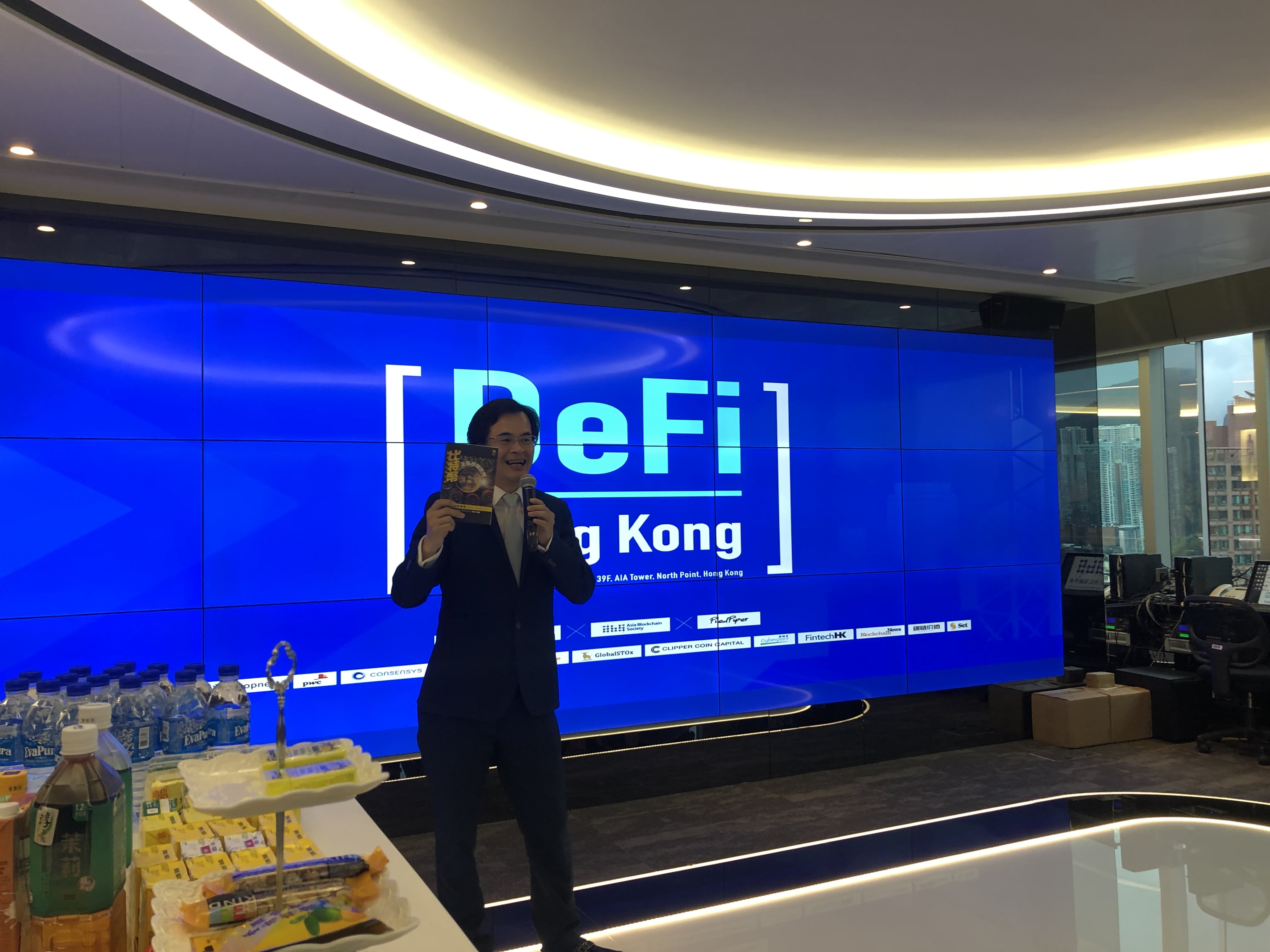
In the opening keynote, Cheney Tsoi, President of Asia Blockchain society explains how Bitcoin is changing the world.
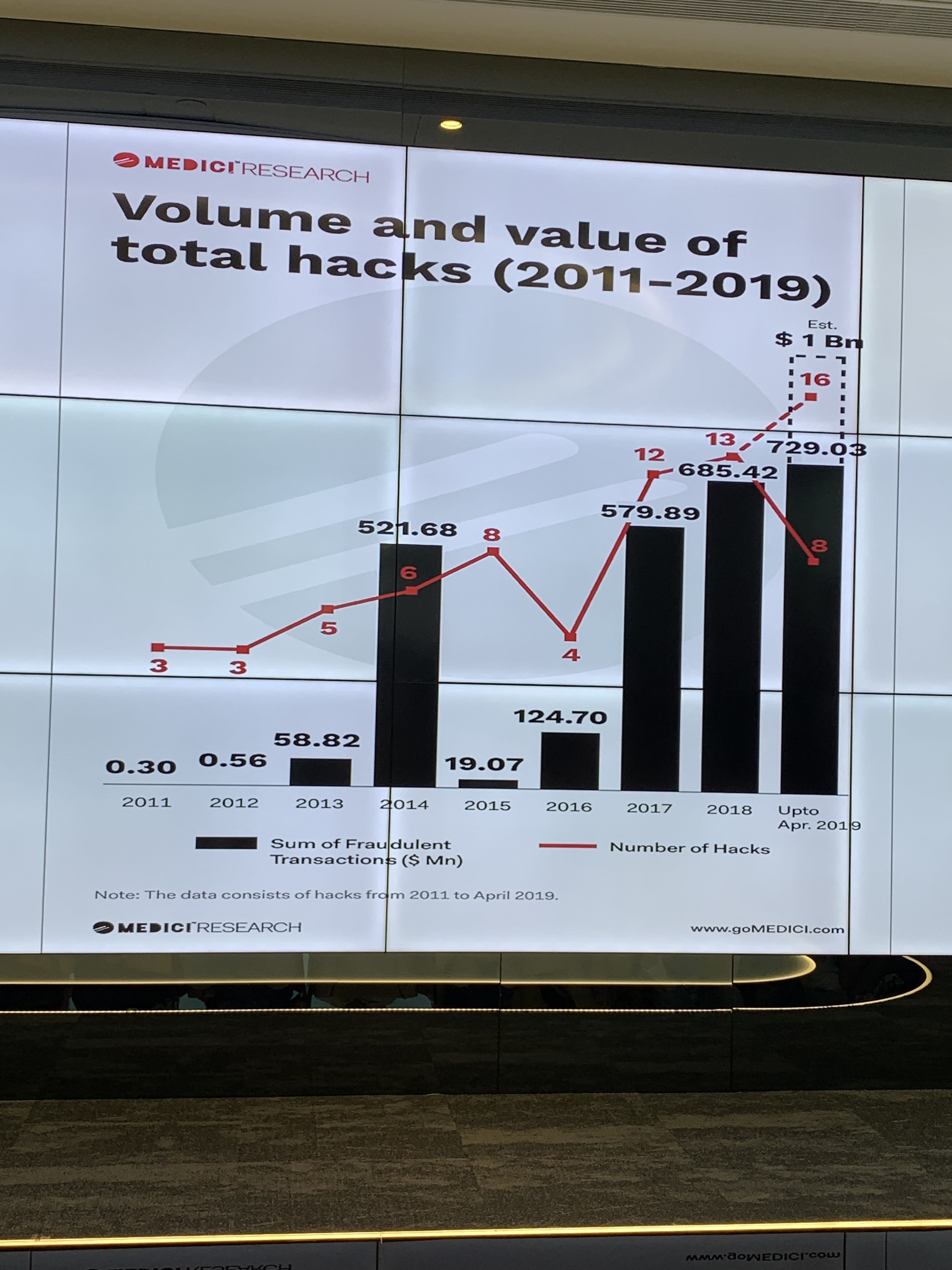
In the keynote “Trust in a Digital Age”, William Gee, Partner of PwC cited the findings by Medici Research and highlighted that the sum of fraudulent transactions and number of hacks are less than what we expected in 2019. This signals a positive sign of trust in digital assets.
State of Decentralized Exchanges
Daniel Wang, CEO of Loopring, presents the current state of decentralized exchange (DEX) with 3 categories:
1) Bonding curve-based e.g. Uniswap, Bancor;
2) Quote-based e.g. Kyber; and
3) Order-based e.g. EtherDelta, Loopring, 0x
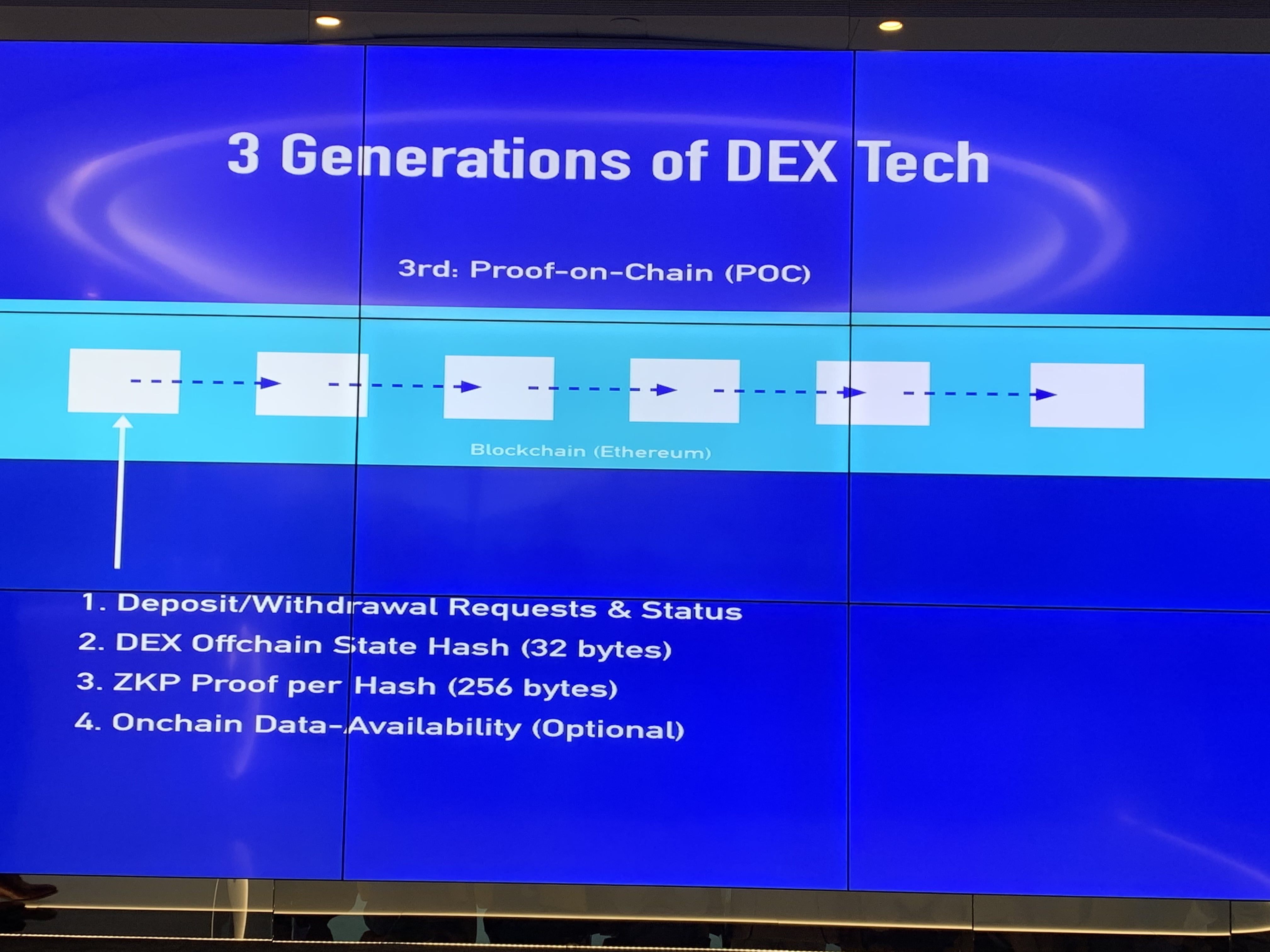
He then illustrates 3 generations of DEX Tech, namely everything-on-chain (EOC), settlement-on-chain (SOC) and Proof-on-chain (PoC) (see Exhibit 1).
Exhibit 1: Comparison of 3 generations of DEX Tech
| # | DEX Tech | On-chain Transactions | Characteristics |
| 1 | Everything-on-chain (EOC) |
|
|
| 2 | Settlement-on-chain (SOC) |
|
|
| 3 | Proof-on-chain (POC) |
|
|
Source: Loopring
Daniel concluded his keynote with 5 key takeaways:
1) Dapps need to find a way to scale;
2) ZKP is a generic scaling solution (besides privacy);
3) Tradeoff between scalability and security; and
4) DEX will prevail soon
5) DEX solution and interoperability are two different concepts.
5 Pillars of DeFi Ecosystem
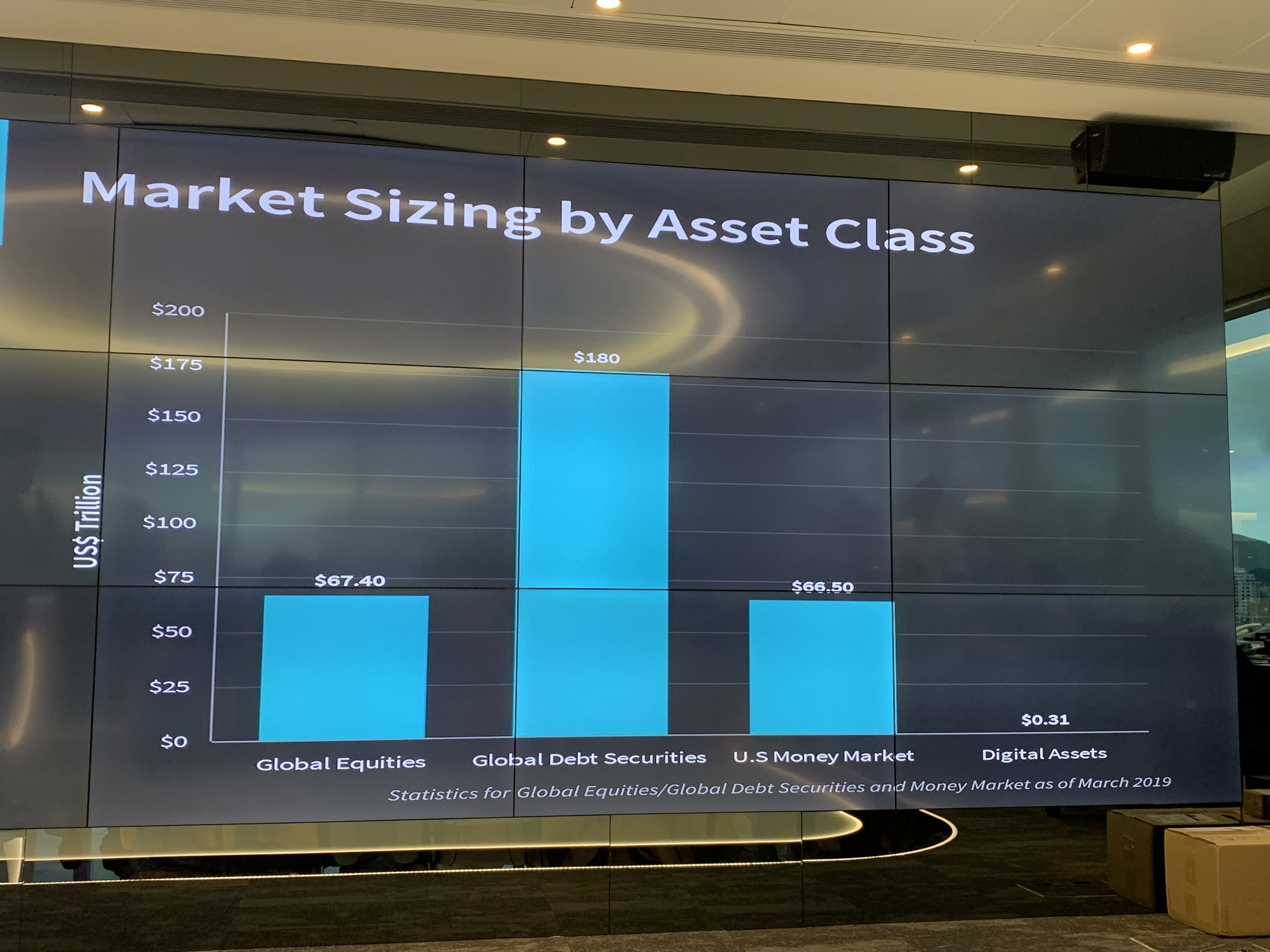
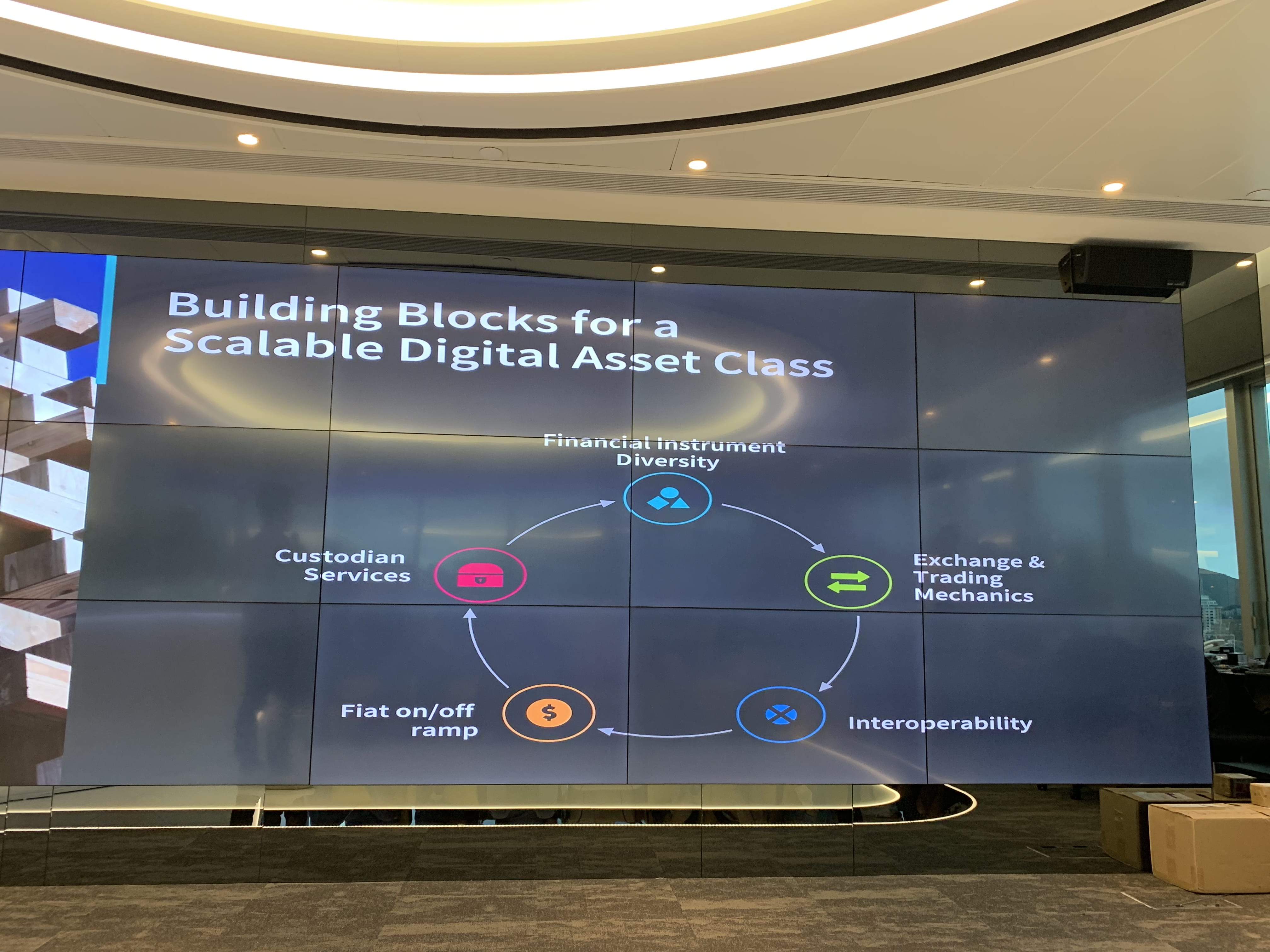
Terry Lam, Co-Founder of Nuts Finance, mentioned that the market capitalization of digital assets is tiny compared to existing financial asset classes. However, he believed that the DeFi is growing rapidly with the 5 pillars:
1) Financial instrument diversity
Aside from spot instruments, the ecosystem requires a diverse selection of digital asset based financial instruments (ie. Instruments with status life cycles such as crypto loans, crypto based promissory notes, crypto forward contracts, etc.)
2) Custodian services
Third party custodian and security solutions to safeguard and insure digital assets
3) Exchange, trading and mechanics
Exchange mechanism and trading technology (ie. matching protocols, order book management, settlement design) are essential to improve the overall trading/exchange experience
4) Fiat on/off ramp
Fiat to crypto and crypto to fiat solutions for mass market to easily convert between fiat and digital assets
5) Interoperability
The movement of digital assets between different blockchain networks
In the DeFi panel, panellists agreed that Facebook’ Libra coin presents huge potential to achieve the vision of DeFi with its 2.7bn monthly user base. However, regulatory and privacy concerns need to be addressed before Libra coin to go mainstream.
5 Challenges for Alternative Investment
Terence Lam, Co-Founder and CEO of Loopnest Accelerator, presented 5 challenges for alternative investment.
1) Rich man’s game;
2) Lack of knowhow and access
3) Long investment cycle
4) Low liquidity
5) High transaction costs
Future of STO?
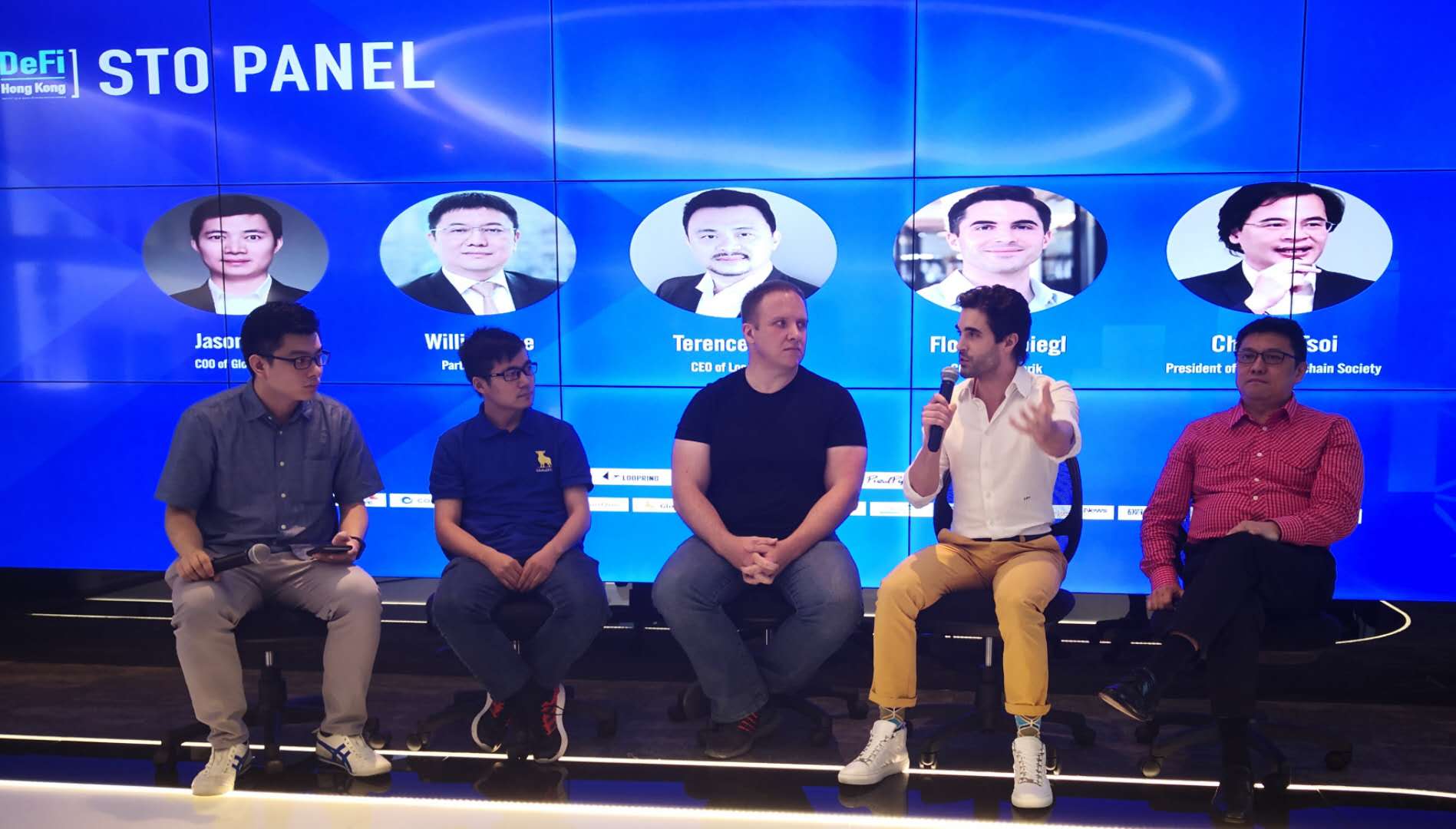
Moderated by Matthew of Blockchain.News, the STO panels explored the future of STO and a deep dive in STO guidelines issued by HKSFC with the following panellists:
1) Jason Gan, Co-Founder of GlobalSTOx
2) Stephen Stanton, COO of Loopnest Accelerator
3) Florian Spiegl, Co-Founder of FinFabrik
4) William Gee, Partner at PwC
The panellists agreed that both IEO and STO served for different purposes and they will co-exist in the future. They believed that financial institutions will tend to pursue STOs with enhanced regulation and investor protection. Discussion was then switched to the HKSFC’s STO guideline published in Mar 2019, where panellists discussed on the definition of “complex product” on security tokens by the HKSFC. They believed that further clarity on “complex product” is required from the HKSFC as the underlying technology of security tokens should not be treated as “complex products”. As the member of HKSFC Fintech Advisory Board, Florian believed that Hong Kong is not lagged in STO regulations against others like Thailand. He added that HKSFC is actively learning from industry leaders to enhance its STO regulations.
For security token trading, panellists believed that DEX will play a very important role in future, however, low liquidity is the first pain point to be addressed.
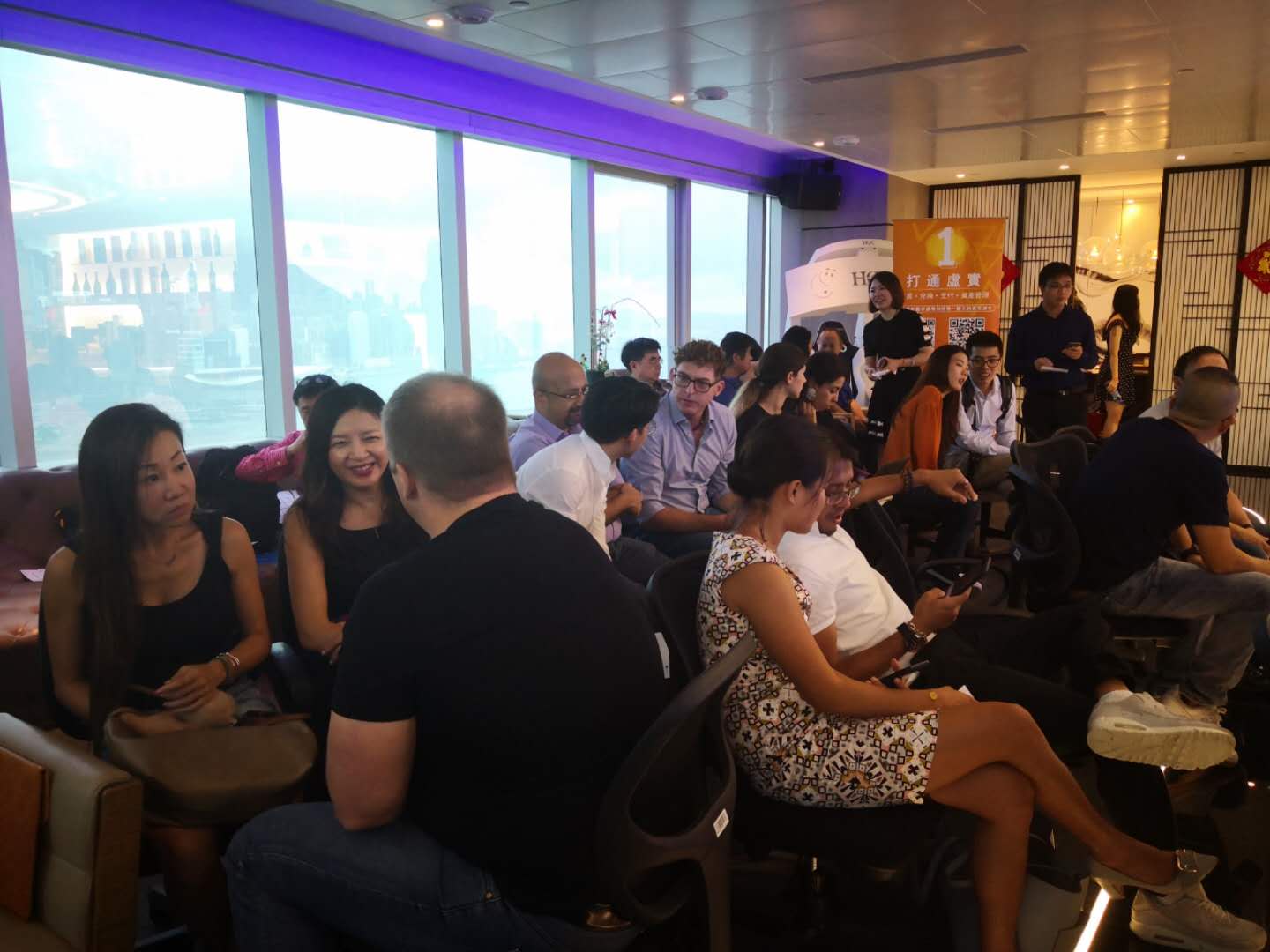
The meetup ended with engaging networking sessions with light refreshments!