


Ethereum Governance: Exploring the Decision-Making Processes and Key Players
- Introduction
Ethereum, the world’s most sprawling blockchain, supports over 4,000 decentralized applications (dapps) and attracts the highest number of developers among public blockchain platforms. The network is expanding with Layer-2 scaling solutions like Arbitrum, Optimism, and Polygon. As the second most valuable blockchain after Bitcoin, changes to the Ethereum protocol have broad implications for the crypto industry.
The Governance Structure
Ethereum's governance is off-chain, primarily driven by the Ethereum Foundation and conducted through online forums like Discord, GitHub, and Ethereum Magicians. Unlike some other blockchain platforms, decisions are not made through on-chain proposals or DAOs, ensuring that large ETH holders do not disproportionately influence governance. However, this off-chain governance model can be opaque and subjective.
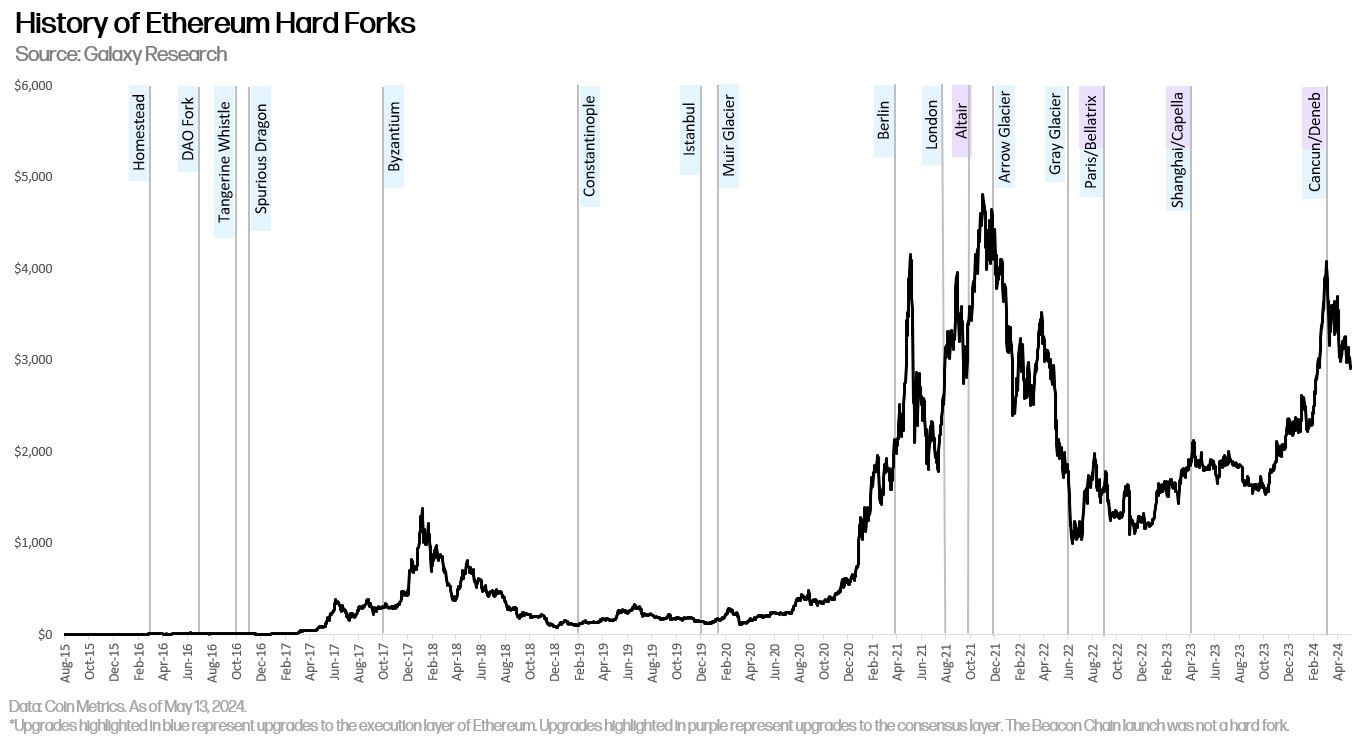
Ethereum frequently deploys hard forks—backwards-incompatible upgrades requiring coordination among users. Over 19 hard forks in the past eight years have made the governance process faster and more structured, relying heavily on weekly All Core Developers (ACD) calls.
The Ethereum Improvement Proposals Process
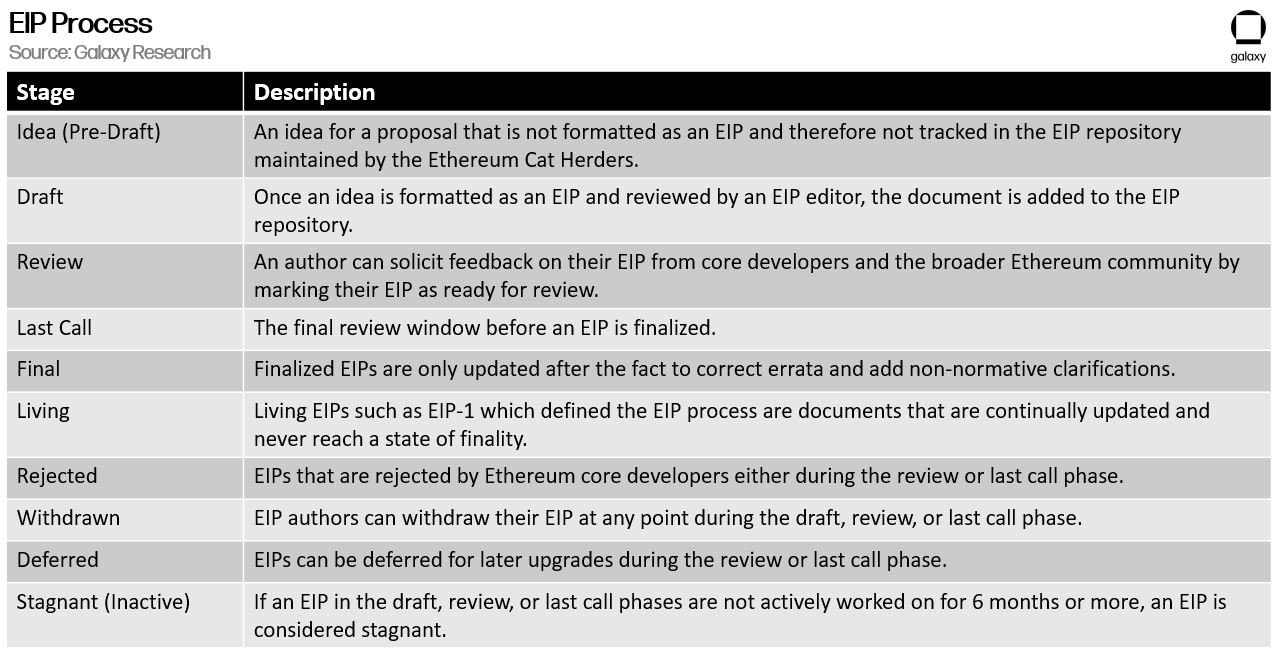
The Ethereum Improvement Proposals (EIP) process is the official method for upgrading Ethereum, based on Bitcoin's BIP process. EIPs are categorized into Standards Track, Meta/Process, and Informational types. Anyone interested in Ethereum can propose an EIP, which is then reviewed by dedicated EIP editors for technical soundness and formatting.
EIPs undergo a community discussion phase, often starting on forums like the Fellowship of Ethereum Magicians. Core EIPs are presented to Ethereum client teams during ACD calls. The five major Ethereum consensus layer clients and four major execution layer clients meet weekly to discuss and review EIPs, deciding which to implement based on urgency and scope.
Key Players in Ethereum Governance
Several groups play crucial roles in Ethereum governance:
- Ethereum Foundation: Created by Ethereum's founders, the Foundation employs researchers and developers and organizes ACD calls and the annual Devcon conference. Despite holding less than 0.3% of total ETH supply, the Foundation remains influential.
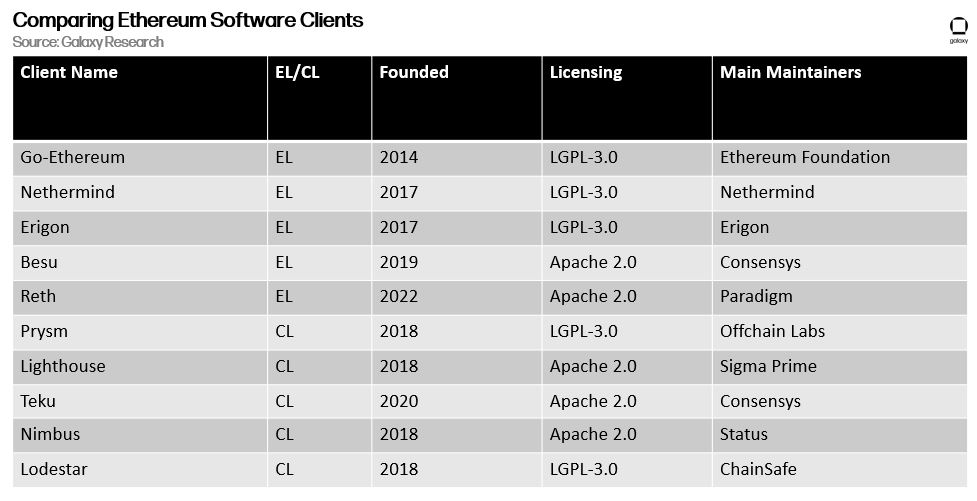
- Client Teams: Nine major client teams build and maintain Ethereum software. Geth, Nethermind, Erigon, and Besu are some of the key clients, each with unique funding sources and development goals.
- Validator Node Operators: Validators replaced miners as Ethereum's primary block producers after the Merge. They ensure network security by staking ETH and are responsible for implementing code changes.
- Dapp Developers: These developers influence governance by shaping use cases and providing feedback on code changes. Notable contributions include EIP 1153, driven by Uniswap Labs and Optimism Labs.
Governance Forums
Governance discussions occur across various forums:
- ACD Calls: These bi-weekly calls are the primary decision-making forum, attended by EIP authors, client teams, and the Ethereum Foundation.
- ETHMagicians and Ethresear.ch: These forums host in-depth discussions on EIPs, technical issues, and community sentiment.
- Discord: A dedicated chatroom for real-time coordination on EIPs and urgent updates.
- GitHub: The primary platform for drafting and documenting Ethereum's codebase.
Past Upgrades and Case Studies
Ethereum has executed 19 hard forks over the past eight years, each shaping its governance process. Notable upgrades include:
- The DAO Hard Fork: After a smart contract vulnerability drained 70% of DAO funds, Ethereum core developers implemented a hard fork to restore the funds, resulting in the creation of Ethereum Classic.
- Parity Multi-Sig Exploit: Despite a proposed EIP to restore frozen funds, community backlash led to its withdrawal, highlighting limits on client team influence.
- The Merge: Transitioning to PoS, the Merge required unprecedented testing and coordination, successfully activating in September 2022.
- Shanghai Upgrade: Activated in April 2023, this upgrade enabled staked ETH withdrawals, significantly boosting staking inflows and solidifying Ethereum's PoS transition.
Future Upgrades
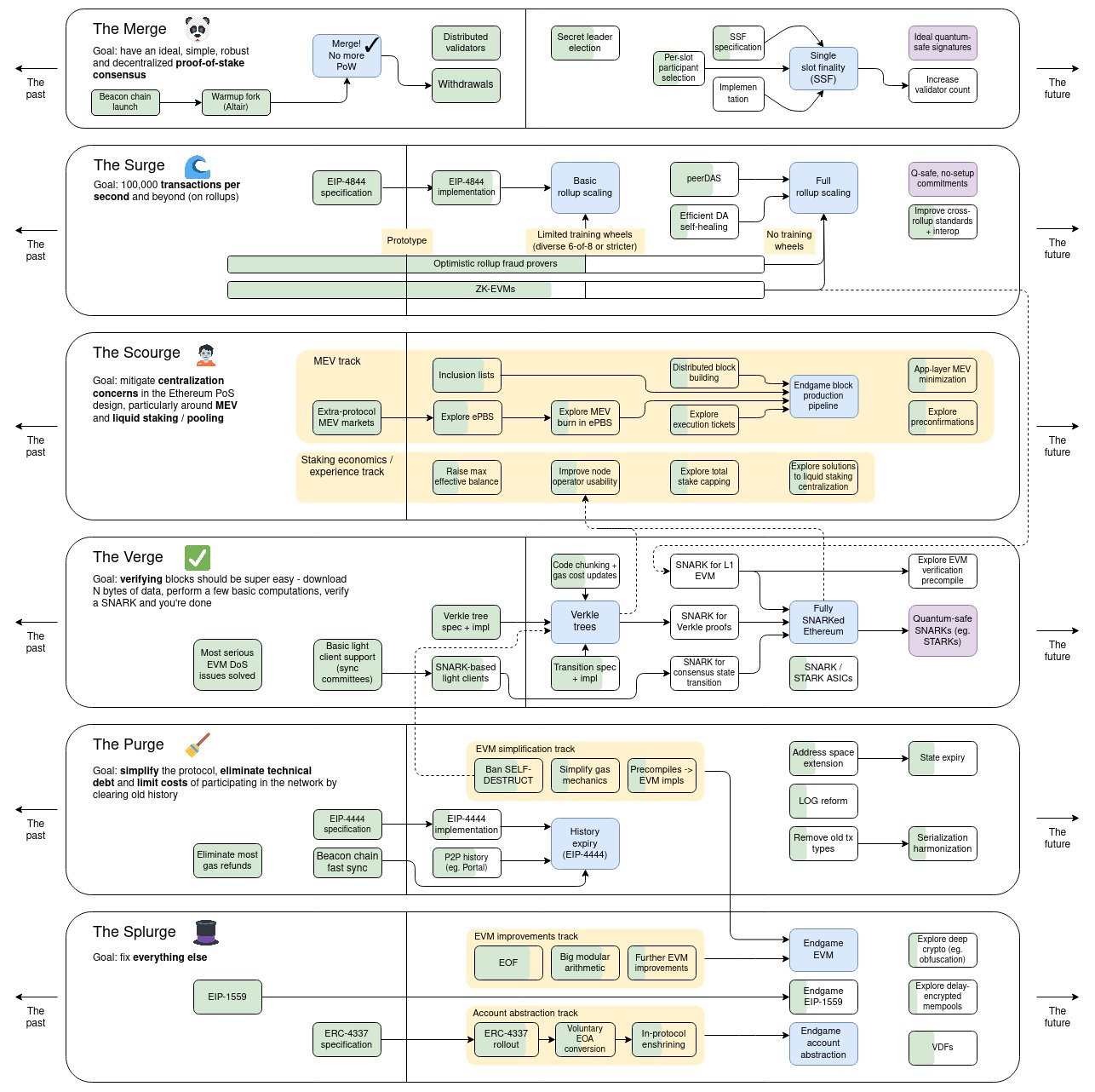
Ethereum's development roadmap includes several ambitious EIPs and initiatives:
- BLS Signatures: Enhancing cryptographic proofs and interoperability with the Beacon Chain.
- Validator Effective Balance: Proposals to increase the effective balance of validators to manage network strain.
- Account Abstraction: Improving user experience by allowing smart contract logic to control user-owned wallets.
- MEV-related Upgrades: Introducing MEV smoothing and MEV burn to address maximal extractable value issues.
- Verkle Trees: More efficient data storage structures compared to Merkle Patricia trees.
Outlook and Conclusion
Ethereum governance, driven by core developers and a growing community, continues to evolve. The protocol's ambitious development roadmap ensures frequent upgrades, emphasizing the importance of distributed decision-making. As Ethereum faces increasing regulatory scrutiny, stakeholders must balance innovation with ossification to safeguard the protocol's decentralized nature.
Ethereum's journey highlights the challenges and successes of governing a decentralized technology, offering valuable insights for the broader blockchain community.
Legal Disclosure:
This document, and the information contained herein, has been provided to you by Galaxy Digital Holdings LP and its affiliates (“Galaxy Digital”) solely for informational purposes. This document may not be reproduced or redistributed in whole or in part, in any format, without the express written approval of Galaxy Digital. Neither the information, nor any opinion contained in this document, constitutes an offer to buy or sell, or a solicitation of an offer to buy or sell, any advisory services, securities, futures, options or other financial instruments or to participate in any advisory services or trading strategy. Nothing contained in this document constitutes investment, legal or tax advice or is an endorsementof any of the digital assets or companies mentioned herein. You should make your own investigations and evaluations of the information herein. Any decisions based on information contained in this document are the sole responsibility of the reader. Certain statements in this document reflect Galaxy Digital’s views, estimates, opinions or predictions (which may be based on proprietary models and assumptions, including, in particular, Galaxy Digital’s views on the current and future market for certain digital assets), and there is no guarantee that these views, estimates, opinions or predictions are currently accurate or that they will be ultimately realized. To the extent these assumptions or models are not correct or circumstances change, the actual performance may vary substantially from, and be less than, the estimates included herein. None of Galaxy Digital nor any of its affiliates, shareholders, partners, members, directors, officers, management, employees or representatives makes any representation or warranty, express or implied, as to the accuracy or completeness of any of the information or any other information (whether communicated in written or oral form) transmitted or made available to you. Each of the aforementioned parties expressly disclaims any and all liability relating to or resulting from the use of this information. Certain information contained herein (including financial information) has been obtained from published and non-published sources. Such information has not been independently verified by Galaxy Digital and, Galaxy Digital, does not assume responsibility for the accuracy of such information. Affiliates of Galaxy Digital may have owned or may own investments in some of the digital assets and protocols discussed in this document. Except where otherwise indicated, the information in this document is based on matters as they exist as of the date of preparation and not as of any future date, and will not be updated or otherwise revised to reflect information that subsequently becomes available, or circumstances existing or changes occurring after the date hereof. This document provides links to other Websites that we think might be of interest to you. Please note that when you click on one of these links, you may be moving to a provider’s website that is not associated with Galaxy Digital. These linked sites and their providers are not controlled by us, and we are not responsible for the contents or the proper operation of any linked site. The inclusion of any link does not imply our endorsement or our adoption of the statements therein. We encourage you to read the terms of use and privacy statements of these linked sites as their policies may differ from ours. The foregoing does not constitute a “research report” as defined by FINRA Rule 2241 or a “debt research report” as defined by FINRA Rule 2242 and was not prepared by Galaxy Digital Partners LLC. For all inquiries, please email [email protected]. ©Copyright Galaxy Digital Holdings LP 2024. All rights reserved.